


Library Reviews
STRANGE PICTURES
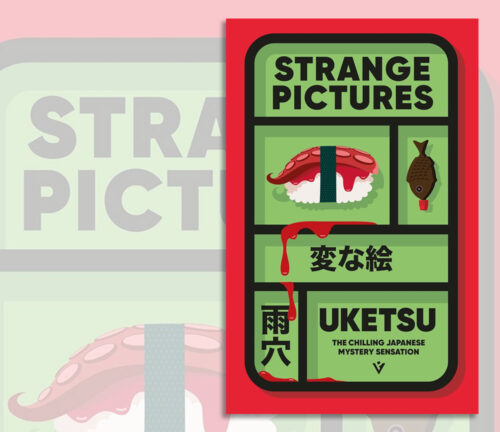
Strange Pictures is a string of mysteries centred on a small family unit in Tokyo. Beginning with an innocuous children’s drawing, the first real enigma is an odd series of illustrations made not long before the demise of the artist. These are rediscovered by a college mystery club duo who encounter them on a cryptic, abandoned blog. The ensuing sleuthing and thought progression quickly demonstrate the diabolically solid logic to look forward to from the rest of the novel.
Distinctly different from other detective novels that may have supplemental maps or floorplans, in this story, visual material is integral and frequent to the point of resembling juvenile fiction. The author’s identity isn’t fully disclosed either. Uketsu is the name of a creepy YouTube content creator who always appears wearing a full face, white mask. His first novel, Strange Houses, was another mystery with reliance on visual matter. It has since also been adapted into a manga.
COFFEE LIFE IN JAPAN
A café symbiotic scholar discusses the Japanese coffee scene from the first coffeehouse through to modern times
It was 1888 when the first coffee house in Japan opened in Tokyo. Its relatively young and cosmopolitan proprietor had acquired a cafe habit when studying and sojourning in the US and UK. His timing couldn’t have been better as Japan was newly enamoured of anything “Western” and “modern”. His lavishly appointed establishment furnished patrons with amenities such as newspapers, desks and writing instruments, billiard tables and even baths and nap rooms. Such generosity was not to be sustainable and the shop closed in 1893. A humble monument now commemorates its physical location but it has the intangible legacy of marking the beginning of Japan’s coffee culture.
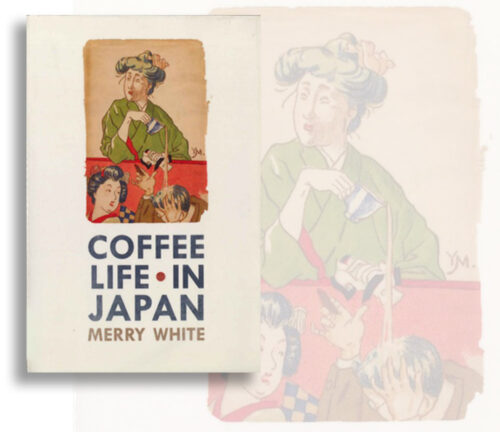
This book doesn’t seek to elucidate much about coffee appreciation. It is more of a discussion about the cafe’s roles and functions within Japan’s social and cultural landscape. A recurring concept is that cafes provide a third space that is neither home nor workplace; rather it is a place where one goes to be private in a public area. Yet different types of cafes abound from jazz cafes and gallery cafes to others that do not serve food and are strictly coffee only. In the past, urban coffeehouses also served as a halfway haven where bewildered migrants from the countryside would congregate and learn from city-savvy villagers who arrived earlier.
Now Professor of Anthropology at Boston University, author Merry White is an American scholar who first visited Japan in 1948. By virtue of her own admission she is unabashedly dependent on cafés and this lifelong fondness for coffee has had interesting side effects. During early fieldwork for this book she learned of surplus Cambodian coffee crops. She then helped facilitate exportation of these to Japan and to the US.
(Previously reviewed. Edited.)
TRADITIONAL COLORS OF JAPAN
Billed as an easy-to-use colour harmony dictionary, find out how well this handy, compact book lives up to its claim.
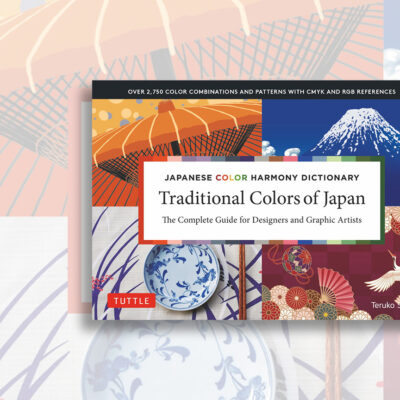
There are plenty of images that are instantly evocative of Japan. Festivals, flora, fauna, landscapes, textiles, classical paintings or modern artwork; many of these can conjure not just the country in general but a specific time and place, seasons and memories. This book has chosen exactly a hundred such scenes and rendered them into colour combinations that are both pleasing to the eye and possess strong recall of their originating image.
All colours are provided with CMYK RGB and HTML identifiers. Each colour scheme is presented with some unique elements such as the originating scene or photo and a unique illustration that demonstrates a full set of colours in use. Simpler examples are used to show the combinations that utilise only two or three colours from a given palette. Common to the presentation of each colour scheme are some recurring elements such as sample patterns and sample designs. These constant shapes and patterns allow for comparison from one scheme to another.
At 288 pages, this compact, wide-format book offers a lot of accessible information without itself taking up much space. It is authored by Teruko Sakurai, who sports a host of credentials with an array of color related international and Japanese organisations.
(Previously reviewed.)