


Library Reviews
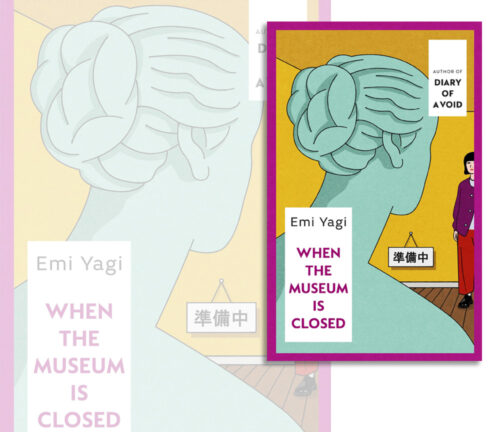
WHEN THE MUSEUM IS CLOSED
EMI YAGI ; Translated by YUKI TEJIMA.
If Pygmalion had a queerchange.
This story features the most unlikely blending of genres and fictional elements. Our heroine is a post graduate introvert who happens to be a Latin virtuoso. Via the academic grapevine, she is hired to visit a museum after hours and converse with a marble statue. The statue identifies herself as Venus instead of Aphrodite due to her sculptor being Roman not Greek. Naturally, her native tongue is also Latin. It’s as if a character in a Haruki Murakami story was recounting the gentle, yuri dream they had.
“I haven’t had a living customer in six months.”
– what the MC hears when she comes out of her shell to get her hair done but chooses a random salon where stylist is primarily a mortician.
The sublime plot is perfectly served by a small cast of memorable, unique characters. The Latin part timer, “Hora”, has a day job in a warehouse freezer. Her roommate is a dotty elderly lady that the landlords have largely fobbed off to their tenant as caretaker. Hora’s other striking characteristic is some kind of PTSD-manifested, psychological raincoat that smothers her sensory input and output. Venus by contrast, exudes timeless calm, imperious assurance, incisive social acumen and a penchant for conversation. Also yes, lady with lady dynamics are involved.
THE MANGA GUIDE TO JAPANESE FOOD
HIROSHI NAGASHIMA
An illustrated introduction to Japan’s food culture, history, types of cuisine and associated topics.
Something like an illustrated textbook, the coverage is devoted entirely to washoku, that is, traditional Japanese cookery, and closely related concepts. Foundation topics are rice, water, tableware, seafood, festivals, knives, fermentation, umami. Within these lie a plethora of historical, scientific and cultural knowledge.
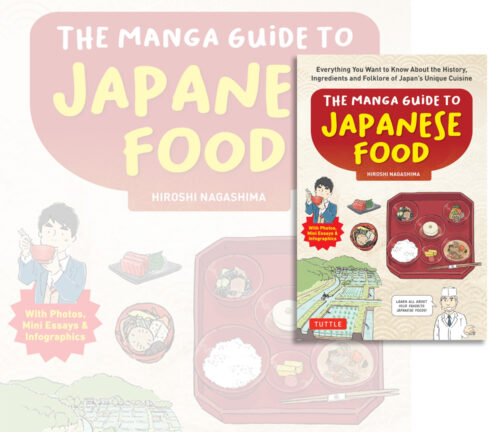
This is not an actual manga though it does have a consistent trio of characters that mirror the book’s progression. The mighty Oishinbo is wearer of the tall toque blanche for food manga. This isn’t a recipe book nor a restaurant guide either. The curated content focuses on traditional dishes and primary ingredients, so it should not surprise that another large segment of Japanese cuisine missing is yōshoku. These culled foods are mostly the later, contemporary creations and localised evolutions of European origin like sando or omurice or kombini foods and the like.
THE BOOK JAPANESE TEA
A good bowl of tea transports the drinker to a sanctuary of tranquillity, refreshing regardless of their current worries, even if only momentarily.
Whether the austere elegance of the tea room or the rich greenness of some matcha, tea has an indelible place among the concepts that are considered quintessentially Japanese. Despite being a relatively thin book, The Book of Japanese Tea covers an encyclopaedic range of subjects in a manner conducive to newcomers. Unfamiliar concepts are made easy to appreciate and explanations have the habit of segueing into some clever insight or into an aspect of Japanese history or culture. Though conciseness is neccessary, topics are given enough weight and explanation that the whole feels comprehensive. Perhaps these qualities being reflective of the writer’s expertise and genuine enthusiasm for his craft.
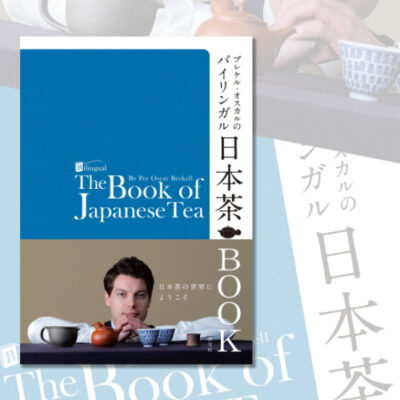
The tea evangelist who authored this book is a Swedish native who now lives in Japan. Per Oscar Brekell’s calling surfaced during high school. In the couple of decades since, he has gained recognition within the Japanese tea industry with some achievements being rare or unique for foreigners. The author himself cuts a dashing figure and his photogenic visage is featured in some conspicuously head high compositions.
This is a bilingual book and features parallel text written in both Japanese and English. Blocks of text are positioned near one another within the same page or on facing pages. This aesthetic synergises with the sublime brevity of the writing. In common with some of Tankosha Publishing’s tea related books, the cover design is understated almost to a fault. Utilitarian with bold, solid colour and a very underplayed image of the subject matter. Inside though, the photography is crisp, vivid and on point with a good mix of the instructional and aesthetic.
(Previously reviewed. Updated.)