
VOD Registration: Japanese Language Education Seminar with UNSW (Feb 2026)
「二つのことばが育む脳の物語 – データで紐解く誕生から30代まで」
VOD (Video on Demand) now available.
If you would like to watch the following VOD, please register below.
Title: How Two Languages Shape the Brain – From Baby to Adult
Presenter: Prof. Hideyuki Taura
Professor at the Graduate School of Language Education and Information Science
Ritsumeikan University, Japan
<Held on February 21, 2026>
After registration, an automated confirmation email with the link and password to access the
VOD page will be sent to your nominated email account.
If this automated email does not reach you within a few minutes of registering, please check your spam or junk folders.
VOD (ビデオオンデマンド)でご視聴いただけます。
ご視聴をご希望の方は、「VOD登録」よりご登録をお願いいたします。
タイトル:「二つのことばが育む脳の物語 – データで紐解く誕生から30代まで」
講師: 田浦秀幸 教授
立命館大学大学院・言語教育情報研究科・教授
<2026年2月21日実施済>
ご登録いただきますと、URLとパスワードが自動送信されます。
こちらの自動送信メールが迷惑フォルダーに入ってしまうこともあります。ご確認下さい。
【Message from the presenters】
In families where both a community language (English) and a heritage/connected language (Japanese) are used, children can grow up in a rich and diverse language and cultural environment. At the same time, parents and teachers at Japanese schools may worry: “Will our children be okay in both English and Japanese?” In this talk, I will explain how contact with multiple languages affects bilingual development (mainly English in Japanese–English bilinguals) and the brain in newborns, preschool children, and students in primary and secondary school. I will also show a case study of a balanced early bilingual on how his language abilities and brain activity changed when he finished university and started working. Even when children grow up in the same environment, their language development and brain use can be very different. I hope this talk helps you see that each child has their own unique and valuable way of growing.
【講師からのメッセージ】
社会言語(英語)と継承/繋生語(日本語)を併用するご家庭では、子どもたちは一般的なオーストラリア人家庭以上に多様で豊かな言語・文化環境に触れることができます。その一方で、「英語も日本語もきちんと身につくのだろうか」と、ご両親や日本人学校・補習校の先生方が不安を抱かれる場面も少なくありません。今回、多言語接触経験が新生児、保育園児、小・中・高校生のバイリンガリティ(主として日英バイリンガルの英語能力)と脳にどのような影響を与えるのか、さらに均衡型早期バイリンガルが大学卒業後に社会で働く中で、言語と脳にどのような変化が生じるのかについて、いくつかのケーススタディを交えてご紹介します。同じ環境で育っても、言語発達や脳の使い方には大きな個人差があり、誰もが固有の価値ある個性を持っていることを理解していただければと思います。
【Session Language】
The seminar was conducted in Japanese.
【セッション言語】
本セミナーは日本語で行われました。
Please complete only in English. 英語のみでご記入下さい。
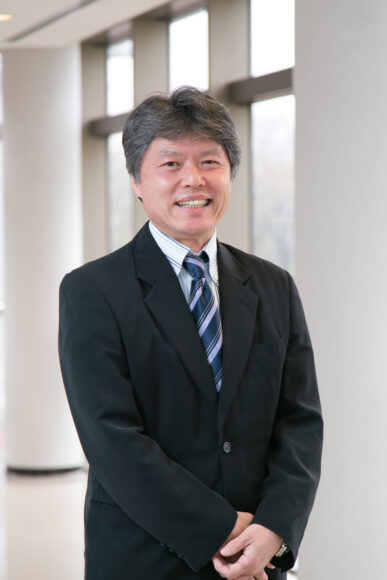
Prof. Hideyuki Taura
Professor at the Graduate School of Language Education and Information Science
Ritsumeikan University, Japan
Hideyuki earned his Master’s and PhD in Linguistics from Macquarie University in Sydney. After working as an English teacher at Senri International School, he held academic positions at institutions including Osaka Prefecture University before taking up his current post.
His research focuses on language acquisition, maintenance, and attrition in bilingual children—particularly returnee students and children from international-marriage families—drawing on perspectives from language sciences and neuroscience. His publications include Bilinguality and Bilingualism in Japanese School-Aged Children (sole author), as well as several books published in Japanese, such as An Introduction to Bilingualism (co-authored) and Can Scientific Training Improve Your English Skills? (sole author).
Married to an Australian, he is also a father who has firsthand experience of the challenges of raising a child in a bilingual environment. About ten years ago, he spent six months visiting the Sydney Saturday School of Japanese, observing classes ranging from kindergarten to Year 9—an experience he found deeply inspiring. He is planning to visit community language schools in Sydney again in 2026.
田浦秀幸 教授
立命館大学大学院・言語教育情報研究科・教授
シドニー・マッコーリー大学で修士・博士号(言語学)取得。千里国際学園で英語教諭を務めた後、大阪府立大学等を経て現職。バイリンガル(帰国生や国際結婚家庭児)を対象に言語習得・保持・喪失研究に関する基礎研究(言語科学・脳科学側面)に従事。著書は “Bilinguality and Bilingualism in Japanese School-Aged Children(単著)、『バイリンガリズム入門』(共著)、『科学的トレーニングで英語力は伸ばせる』(単著)など。オーストラリア人と結婚し、二言語環境での子育ての大変さを痛感した父親でもある。約10年前にシドニー日本語土曜学校を半年間、幼稚園部から中学3年生までクラス見学を行った。
SEMINAR DETAILS
This seminar has already occurred.
VOD (Video on Demand)
Registrations are required to access the VOD. After registering, an automated email containing the VOD link and login password will be sent to your registered email address.
ENQUIRIES
(02) 8239 0055
Presented by