Japanese Economy, Critical Minerals and the Energy Transition
Free seminar
February 17, 2026
This seminar examines Japan’s economic outlook and its strategic position in the global energy transition. Session 1 will review the structural trends in the Japanese economy and give an overview of recent developments, including challenges and the implications of ongoing efforts to avoid stagflation — inflation and low growth — and normalise macroeconomic conditions. Speakers will highlight the drivers of growth, policy shifts, and the broader context shaping Japan’s economic trajectory, followed by audience discussion.
Session 2 turns to critical minerals and the decarbonisation agenda in a dialogue between panelists. The discussion will explore Japan’s progress and policy approach to reducing emissions, the role of critical minerals in emerging clean-energy technologies, and the geopolitical and supply-chain risks shaping Japan’s strategy. The panel will also analyse the significance of Australia–Japan cooperation in securing materials, strengthening energy security, and cooperation advancing the energy transition.
2026 marks the 50th anniversary of the Basic Treaty of Friendship and Cooperation between Australia and Japan. This agreement opened up investment and people-to-people relationships between the two countries, and deepened the economic relationship. The seminar will also discuss the priorities and opportunities for the next 50 years of the Australia-Japan relationship.
Japan’s Economy
Japan’s population is ageing and shrinking. The economy is experiencing inflation for the first time in decades while managing large public debt and low growth. Labour shortages threaten a dynamic private sector that is dealing with trade policy uncertainty globally and competition from large neighbouring countries China and South Korea. How Japan navigates these challenges matters greatly for Japan but also for the Australian and regional economies. Japan is Australia’s second largest trading partner and one of its largest sources of direct investment. It is also a crucial pillar of stability in the regional and global economy.
How do the three arrows of Sanaenomics differ from those of Abenomics? Can reform succeed in boosting economic growth? Will government spending on economic security measures like reviving the semiconductor industry and boosting defence spending complicate the Bank of Japan’s quantitative tightening and normalisation of monetary policy? These and other pertinent questions will be addressed for a general audience.
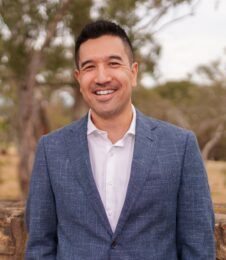
PROF SHIRO ARMSTRONG
Shiro Armstrong is Professor of Economics at the Crawford School of Public Policy at The Australian National University. He is Director of the Australia-Japan Research Centre, Editor of the East Asia Forum, and Director of the East Asian Bureau of Economic Research. He is also a Visiting Professor at Keio University, Research Associate at the Center on Japanese Economy and Business at the Columbia Business School and Non-resident Fellow at the Research Institute of Economy, Trade and Industry, Japan. He is the recipient of the 2024 Nakasone Yasuhiro Award and a member of the Board of the Australia Japan Foundation.

PROF SHIGENORI SHIRATSUKA
Shigenori Shiratsuka is Professor at the Faculty of Economics, Keio University. He is an expert in monetary economics and macroeconomics, especially in central banking and inflation measurement. Before joining Keio University in September 2019, he served as an economist at the Bank of Japan for 32 years after graduating from Keio University in 1987. He held the positions of Director-General of the Institute for Monetary and Economic Studies, Deputy Director-General of the Monetary Affairs Department, and General Manager of the Kanazawa and Matsuya Branches. He received his Ph.D. from Keio University.
Critical Minerals and the Energy Transition
Australia and Japan have committed to decarbonise their economies with net-zero emissions targets by 2050. A natural resource-rich Australia and natural resource-poor Japan are glued together economically by complementarity. The bilateral economic relationship is dominated by investment and trade in fossil fuels and that will need to be transformed.
This session will assess the progress in Japan’s energy transition and examine the role of critical minerals in emerging clean-energy technologies and the geopolitical and supply-chain risks shaping Japan’s strategy. How is Japan’s GX (green transition) progressing and what are the challenges for Japan? What policies have been implemented and what has been the private sector’s response?
Opportunities to deepen Australia-Japan cooperation on critical minerals development and decarbonisation will also be examined. What will decarbonisation in Australia and Japan look like without deeper cooperation bilaterally and regionally? The most prospective areas for cooperation such as standard setting internationally, decarbonising the iron and steel industries, clean tech development and whether the bilateral relationship can transition to a zero- or low-emissions embedded goods trade will be explored.
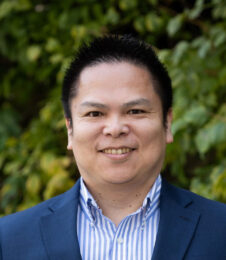 DR HIROSHI MATSUSHIMA
Hiroshi Matsushima is a Research Fellow at the Crawford School of Public Policy, Australian National University, where he is affiliated with the Australia-Japan Research Centre. His research investigates government regulation in the energy and transport sectors. His current work examines optimal regulatory design for the energy transition, including vehicle efficiency standards, integration of renewables and batteries in power markets, equity outcomes, and the economics of the energy trade transition.
MODERATOR
 MS WENDY HOLDENSON
Wendy Holdenson is a business professional with experience at the highest levels of both the public and private sectors. After studying in Japan as a university student, Wendy rose through the ranks of many companies before being appointed Australia’s Consul-General and Trade and Investment Commissioner for West Japan, then Austrade’s State Director for WA, SA and the NT.
Wendy was later appointed Executive Director and COO of Mitsui & Co. (Australia), a subsidiary of one of Japan’s largest investors in Australia, and Trustee of Mitsui Educational Foundation.
Other board appointments include Australia-Japan Foundation and Kyushu Sangyo University.
In 2024, Wendy received the Japanese Foreign Minister’s Commendation for services to the bilateral economic relationship.
EVENT DETAILS
February 17, 2026 (Tuesday)
2:00pm – 4:30pm AEDT
Japan’s Economy 60min + Critical Minerals and the Energy Transition 60min + Networking 30min
Free; bookings not required
Attend onsite, in-person or watch online.
Video via Facebook.
No account or login required.
Check link for a video from 2:00pm on the day.
*There will be NO VIDEO RECORDINGS available.
VENUE
For onsite attendance, find us at:
The Japan Foundation, Sydney
Level 4, Central Park
28 Broadway, Chippendale NSW 2008
ADMISSION
Free; bookings not required
ENQUIRIES
(02) 8239 0055
Presented by