
In Conversation: Health and Wellbeing Following Disaster
Free Talk Event
November 3, 2025
Natural disasters and extreme weather events are on the rise in recent years. Post disaster reconstruction tends to be more focused on buildings and infrastructure, but not as much as on people who have experienced disasters.
Two experts from Japan and Australia will deliver presentations on disaster experiences at different life stages focusing on Japan, Australia, and surrounding regions.
Prof. Junko Otani is currently researching at the University of Melbourne as part of the Japan Foundation Indo-Pacific Partnership Program (JFIPP Research Fellowship), and conducting a joint research with Prof. Lisa Gibbs on health and wellbeing following disaster.
Disaster experiences at different life stages – stories from Japan’s experiences
The talk will share stories focusing on people, who are what is so-called Saigai Jakusha (the disaster vulnerable): women and children, the older people and the disabled people, in various disasters such as the 1995 Great Hanshin Earthquake, the 2011 Great East Japan Earthquake and Tsunami, the 2020–2021 COVID-19 pandemic and the 2024 New Years Day Noto Peninsula Earthquake. They are not only the vulnerable but often play an active role contributing to the recovery and resilience of individuals, family, community and society. It will also document and highlight Japanese experiences and identify the particularity of Japanese cases.
Topics to be covered
- Understanding the challenges in issues in disaster settings with ageing populations
- Identifying lessons learnt to share from Japan’s experiences
- Attempting to translate those lessons to apply in another socio-cultural context in discussion with other speaker, Prof Lisa Gibbs
- Using documented lessons to prepare for the next disasters to come in ageing society
This occasion is the book launch of
Paola Cavaliere and Junko Otani (Eds.) Handbook of Disaster Studies in Japan, Tokyo: MHM Limited, Amsterdam University Press & Routledge. 2025
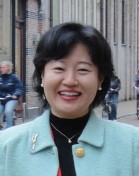 PROF JUNKO OTANI
Junko Otani is Professor in the Graduate School of Human Sciences at the University of Osaka and is currently based in Melbourne as a JFIPP fellow. She obtained her DDS from Osaka University, her MPH in international health and MS in population science from Harvard University and her PhD in social policy and administration from the London School of Economics. Her areas of specialisation are international health and population, social development studies, area studies, and research methodology. Her publication includes: Handbook on Disaster Studies in Japan, Reconstructing Resilient Communities after the Wenchuan Earthquake: Disaster Recovery in China, and Older People and Natural Disasters.
Disaster experiences at different life stages – supporting wellbeing outcomes
Disasters can be caused by many different types of hazard events but tend to result in relatively consistent mental health and wellbeing impacts. Examining the experiences of people at different life stages can provide helpful insights into strategies which are likely to promote the best outcomes. This increased understanding becomes particularly important as climate-related disasters increase in frequency, severity and complexity. This presentation will draw on insights from international and Australian evidence to discuss the experiences of children and school communities, adults and place-based communities, and older adults in terms of strengths, challenges and support opportunities. Conceptual frameworks and resources will be presented to provide practical guidance on how to implement promising community-based approaches, particularly related to social and mental wellbeing strategies.
Topics to be covered
- Understanding the potential long term mental health impacts of disasters
- Identifying risk and protective factors for people at different life stages
- Translating evidence into practical strategies to support wellbeing outcomes
- Using available resources to guide disaster preparedness and recovery
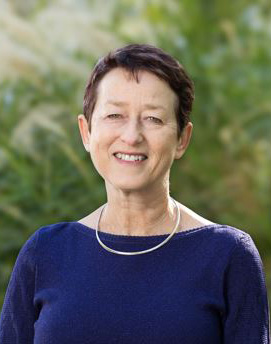 PROF LISA GIBBS
Lisa Gibbs is a Professor of Public Health at the University of Melbourne and Director of the Disaster, Climate and Adversity Unit within Melbourne School of Population and Global Health, University of Melbourne. She leads an extensive applied research program investigating the health and wellbeing impacts of disasters and the complex social influences on outcomes. She provides expert advice and evidence based resources to leading disaster resilience and recovery agencies including the World Health Organisation (WHO), the International Federation of Red Cross and Red Crescent Societies, Australian Red Cross, Australian Institute for Disaster Resilience (AIDR), 54 Reasons (formerly Save the Children Australia) and Federal and State Government Departments.
About The Japan Foundation Indo-Pacific Partnership Program
The Japan Foundation Indo-Pacific Partnership Program (JFIPP) is designed to promote international research and collaborative activities on common policy issues within and beyond the Indo-Pacific region. The program encourages a new generation of researchers, experts, and practitioners who share the same concerns to build a platform for intellectual cooperation and to support the formulation of new policy proposals, visions, and initiatives from the Indo-Pacific region with a long-term, future-oriented perspective.
About JFIPP Research Fellowship
JFIPP Research Fellowship provides support for individual researchers and practitioners in Japan, Australia, India, or the US to conduct research activities on the common policy issues in the Indo-Pacific region.
EVENT DETAILS
November 3, 2025 (Monday)
6:00pm – 7:30pm AEDT
30min presentations + 20min Q&A
Free; bookings not required
Attend onsite, in-person or watch online.
Video via Facebook.
No account or login required.
Check link for a video from 6:00pm on the day.
*There will be NO VIDEO RECORDINGS available.
VENUE
For onsite attendance, find us at:
The Japan Foundation, Sydney
Level 4, Central Park
28 Broadway, Chippendale NSW 2008
ADMISSION
Free; bookings not required
ENQUIRIES
(02) 8239 0055
Presented by