


Library Reviews
THE TRAITOR – A NOVEL
KOBO ABE Translated by MARK GIBEAU
The story begins with an unnamed journalist who encounters an innkeeper obsessed with a local urban legend. It concerns the fate of 300, unusually well-disciplined escapees, who disappeared into Hokkaido in the early years of the Meiji restoration. It soon transpires that a major cog in proceedings was an incarcerated official, who was himself the target of the machinations of a vengeful, ex-shinsengumi, former comrade.
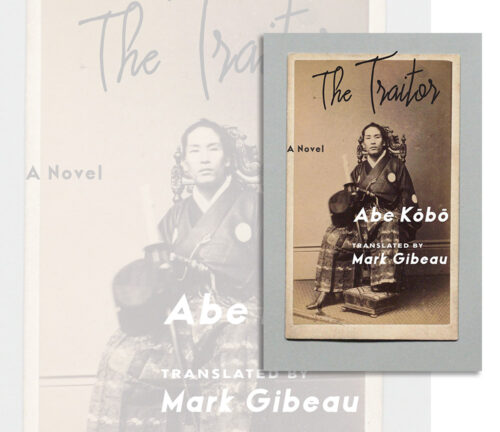
Structurally complex, The Traitor encompasses several time spans and is conveyed via multiple narrators. To wit, a bulk of the content is, in-world, a collation of integrated matter (newspaper excerpts, interview logs, diary entries, letters, personal journals) that has been assembled by a past individual, translated by another character, acquired and edited by the innkeeper and later read by the journalist.
The real life Enomoto Takeaki was a leading figure in the Tokugawa Navy during the fall of the shogunate. Refusing to surrender, he took the still formidable fleet to Hokkaido. As history records, subsequent events did not resolve in favour of the forces of the former bakufu. Enomoto was taken prisoner and jailed. He would later be released and serve a senior role in the Imperial Navy.
It was 1964 when Kobe Abe built out this historical framework into a rich, realised, plausible saga. Several years later, UK writer Frederick Forsyth would craft a comparable, historically divergent work as a straight thriller. A long time in gestation, Mark Gibeau’s translation of Enomoto Takeaki as The Traitor gives English readers their first chance to be exposed to a sprawling, digressive, cerebrally intensive epic. Always revolving around the core rumination on the concept of loyalty the uncertainty of personal motives and conduct.
TOKYO EXPRESS
SEICHŌ MATSUMOTO
Two bodies are found immaculately poised on the windswept outcrop of a rocky beach. Outwardly a double suicide, the young couple have only expired the night before. Some niggling inconsistencies however, cause a couple of fringe detectives to separately begin to pick at the case. Unravelling of the crime also demonstrates Japan’s emergent transit mesh of egalitarian air, land and sea commuting. The rail scheduling in particular, exactingly reflective of the actual year.
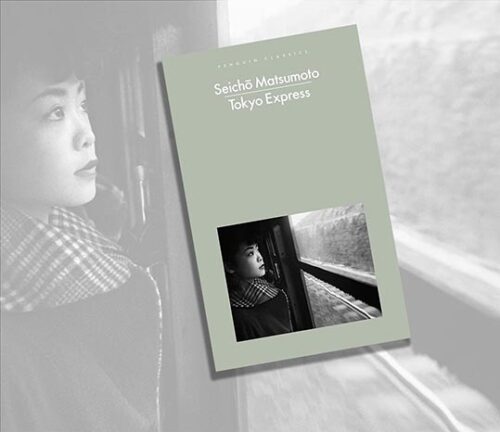
Reading Tokyo Express is to visit an age of physical tickets, newsprint, handwritten forms and manual checks. A map is included in the opening portion of the novel. This classic, analogue setting is the backdrop to the legwork and the mix of doggedness and intuition brought to bear on a frighteningly meticulous and ingenious crime. Long distance, mixed mode travel are integral and several locations at Japan’s extremities will be visited in the course of the investigation.
Seicho Matsumoto won the Akutagawa Prize in 1952. He was aged 43 at the time which was on the older side for a prize that recognises new and emerging authors. During and before the war there existed a ban on detective stories. These were considered a European product and local authors were not allowed to write in this style. It wasn’t until some years after his award that he devoted himself to writing full time in his favoured genre and he became known for his mystery and detective fiction. His peak output included 3 bestsellers in 2 years, one of which was this work. The story can also be found as a theatrical film which was somehow produced in the very same year the novel was published.
Tokyo Express was previously published in English under its translated title of “Points and Lines” (点と線). This edition’s alternative title is mildly odd. Instead of parallels with Agatha Christie’s eminent train mystery, Tokyo Express is more reminiscent of travel heavy thrillers of the same time period. The criss-crossing of Japan via different modes of transport evocative even of Frederick Forsyth’s anonymous assassin journeying through Europe and then deep into France.
(Previously reviewed.)
SHINSENGUMI : THE SHŌGUN’S LAST SAMURAI CORPS
ROMULUS HILLSBOROUGH
A colourful account of the shōgun’s last samurai corps who policed Kyoto during the end of the Tokugawa era.
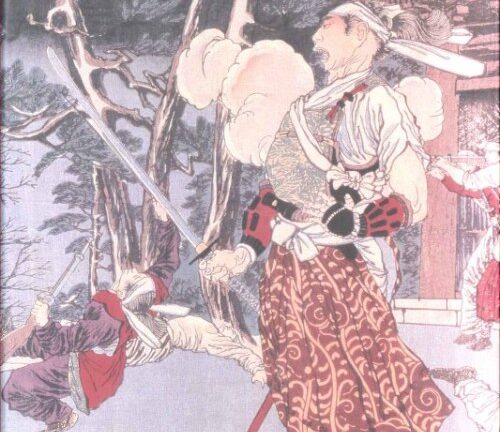
The Shinsengumi were a hardened cadre of elite swordsmen who policed Kyoto during the waning years of the Tokugawa shogunate. During that time, the Imperial capital was marred by violent unrest between Tokugawa supporters and the loyalists who wished to restore power to the Emperor. Ostensibly charged with keeping the peace, at the behest of the shogun, the Shinsengumi achieved this by exercising their own ruthless brand of violence.
It is easy to see why the Shinsengumi are the inspiration for popular historical and fictional works. Their legacy is somewhat of a conjunction of tragic appeals: champions of a glorious but doomed faction, virtuosos with romantic but inexorably outmoded weaponry, victorious in battles against numerically superior opposition, and adherence to an unforgiving code of conduct that was brutal to foes and members alike. Reinforcing the mystique is the reality that several foundation members survived the dissolution of the corp. They lived on into old age and recorded memoirs of their exploits.
At the time of publication, there were not many dedicated resources about the Shinsengumi in either native or translated English. Foremostly speaking, Romulus Hillsborough’s rendition is dramatic and entertaining – as if befitting of the tumultuous lives of the swordsmen and upheaval of their times. Also, while the book portrays the Shinsengumi in a positive light, there is no mistaking the bloodletting and frequent lethality of their actions. It isn’t only the portrayal that is dichotomous: the Shinsengumi leaders themselves personally believed in the doctrine of expelling foreigners just as fervently as the pro-imperial forces that they clashed with.
(Previously reviewed. Edited.)