


Library Reviews
WHERE THE WILD LADIES ARE
Modernisations of classic ghost stories from Japanese folklore. Serving a loosely connecting presence is a kooky factory producing incense sticks.

Kaidan, sometimes kwaidan, refer to traditional supernatural horror that have an origin from, or are set during, Edo times. Many would feature a female character as the wronged mortal or the cursed spirit. Matsuda Aoko’s spin on the tales presents characters in a far less victimised slant. Themes of marriage, careers and companionship are all gently feminist leaning though free of misandry. Overall tone falls on the mellow side instead of being the outright chillers that some of the originating tales were.
This anthology comprises 17 short stories with lengths from less than ten pages to about as long as thirty. Adaptations have been reworked to varying degrees. For example, the sirens from the Peony Lanterns are now a pair of door to door salesladies. The tragic Oiwa of Yotsuya Kaidan (四谷怪談) is given one of the strongest, self referential, post modern treatments. Stories actually take place in the same shared instance of fictional, modern Japan. Part of the intrigue is that associations are sometimes subtle or only apparent in hindsight. This English edition title is a salacious take on the original, more neutral, Japanese title (おばちゃんたちのいるところ).
YOSHIMASA AND THE SILVER PAVLIION
Politically sidelined, the eighth Ashikaga shogun, Yoshimasa, instead cultivated a disposition for artistic refinement. Rather than any military or politcal advances, he would leave an enduring influence on Japanese ideals.
For the majority of the Ashikaga lineage (1336 to 1573), shogunal authority diminished while the power of daimyō (family houses) ascended. Eventually, the destabalising dynasty would precursor the sengoku jidai (Warring States period). Yoshimasa proved so insipid at matters of state that he was reduced to a non‑participant during the Ōnin War, a 10-year civil war fought between the factions that were the effective governing powers of Japan.
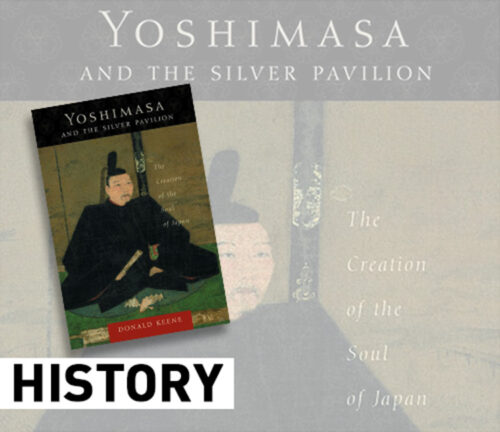
Incongruously, such an inept individual would be responsible for fostering many aspects of culture that are now considered intrinsically Japanese. Due to his enthusiasm and encouragement, tea ceremony, garden cultivation and flower arrangement in particular began to achieve the Japanese characteristics that they possess today. The aesthetic tastes and preferences that he contributed to are referred to as Higashiyama, named for a modest mountain retreat and the location of his Silver Pavilion (Ginkaku-ji) that embodied his philosophy.
It is said that Yoshimasa’s “interests extended to every art practiced in his time” such as noh theatre, landscaping, painting, calligraphy and esoterics such as perfume blending (kōdō). He became proficient at several disciplines in his own right and was an authority on the verification of Chinese artwork due to his personal collection. Unlike his grandfather Yoshimitsu, who seemed to covet anything of Chinese origin, Yoshimasa would exercise critical discretion as to what he collected and favoured. Yoshimasa was also progressive in his tendency to overlook social strata in artisans as long as they were skilled at producing whatever he found appealing. He would consult with experts but still exercise his own judgement when commissioning his projects. Within the realm of artistic pursuits, Yoshimasa displayed the knowledgeable, exacting and assertive behaviour that would have been good qualities in a leader.
The late author, Donald Keene was Professor Emeritus of Columbia University and spent over 52 years in Japan. A recognised expert on Japanese literature and culture. Though this book centres on Yoshimasa’s cultural actions and accomplishments, it sets up the scene by recounting events leading up to Yoshimasa’s reign. It is extensively annotated with some 40 of its final pages covering bibliographic references and further reading.
(Previously reviewed. Edited)
GETTING ALONG IN JAPANESE
A 10-episode DVD series teaching Japanese language for handling day-to-day life in Japan.
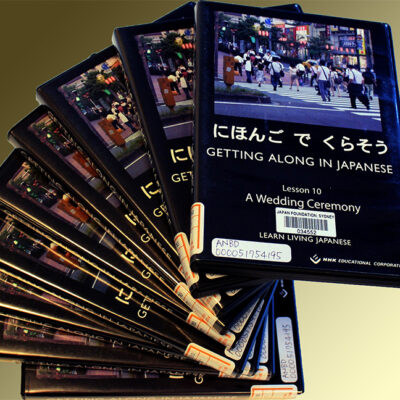
This programme was originally produced and broadcast by NHK in 1999. It targets non-Japanese speaking residents in Japan wanting to learn basic conversational Japanese. This DVD set is comprised of 10 episodes that were selected from the original 6-month (26 episodes) series.
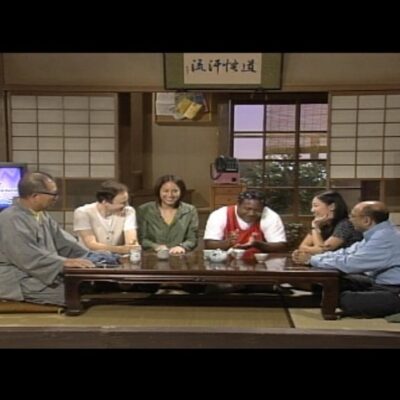
Each episode begins with the same sitcom style opening. The boarders of Kobayashi boarding house talk about their day-to-day experiences living in Japan and often problems will exist due to their lack of knowledge on Japanese language and culture. Mr Kobayashi, the landlord of the boarding house, and his daughter Kaori will join the conversation and drop hints to the boarders as to how they should handle the situation. The topics discussed are then featured as the key points in the Japanese dialogue skit that follow.
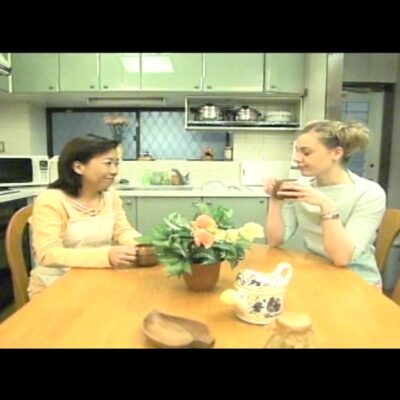
The other type of segment are the skits and these feature a separate cast and setting. The two main characters are Chloé and Michelle who share an apartment in Tokyo and appear in skits throughout the 10 episodes. Japanese side characters include a shop assistant, neighbour, their landlady, and so on. Each skit, Chloé tries to handle a typical daily task such as shopping or asking for directions. She will speak reasonably good Japanese and usually accomplish her initial task, however her eccentric behaviour always results in a humorous outcome.
The programme goes back to the sitcom setting after the skit, and then Mr Kobayashi and Kaori start giving a language lesson to their boarders.
The programme obviously targets introductory level learners since the overall presentation of the programme is quite casual and English is spoken prevalently throughout the programme. Though there are no scenes depicting smartphones or wireless internet, the settings and background visuals have managed to age quite well and do not have the archaic, dated appearance that can afflict vintage programs.
DVD contents:
[disc 1] Going shopping – [disc 2] Asking the way – [disc 3] Taking the train and bus – [disc 4] Getting along with neighbours – [disc 5] Going out to eat – [disc 6] At a restaurant – [disc 7] Visiting a Japanese home – [disc 8] Preparing a meal – [disc 9] Coping with a misunderstanding – [disc 10] A wedding ceremony
(Previously reviewed 2013.)