

NihonGO! PRESENTATION FEST
Poster is available for download
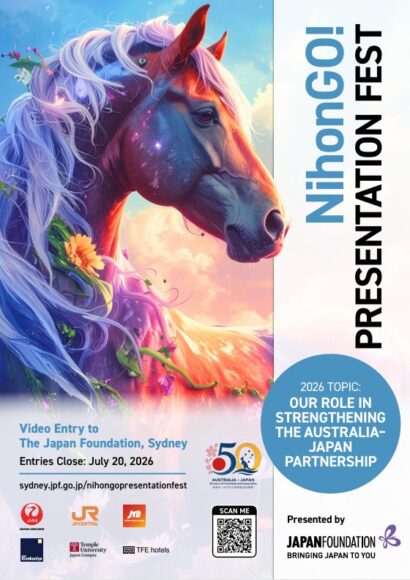 This is a contest by The Japan Foundation, Sydney that gives Japanese language users in Australia the opportunity to present their messages by using Japanese.
Presentation skills are indispensable for people with different ideas to exchange opinions and thoughts to understand each other. Especially in today’s world with advanced technologies, it has become common to use images and videos as well as words to convey messages. By communicating in this way, you can cross language barriers and reach a wider audience for mutual understanding in the world.
CONTEST FORMAT
Entries should be made directly to The Japan Foundation, Sydney. There are no state/territory level contests as a pre-requirement.
The contestant must be able to send a message to not only Japanese language users, but also to those who don’t know Japanese by using methods other than language itself.
The presentation must include a human voice speaking Japanese (artificial human voice is unacceptable), however the supporting contents don’t have to be in Japanese.
The Presentation Topic for 2026 is OUR ROLE IN STRENGTHENING THE AUSTRALIA-JAPAN PARTNERSHIP
DIVISIONS
- High School Senior Division (Year 11 and 12)
- Open Division
HOW TO ENTER
- Read the guidelines for details
- Record your presentation in a video
- Upload it to YouTube
- Submit your entry form
Announcement Of The 2026 Winners!
In the third year in a row, NihonGO! Presentation Fest 2026 attracted an impressive array of outstanding presentations.
This year’s topic was “Our Roles in Strengthening the Australia-Japan Partnership” to celebrate the 50th anniversary of the signing of the basic treaty of friendship and co-operation between Japan and Australia. Each presentation has a different approach to this topic and discussed it in a unique way which is related to their own experience. And the judging was conducted based on the following points as in the past years.
Message (50%), Effect (20%), Structure (20%) and Language (10%)
Please note that due to strengthened policy and regulations regarding copyright, personal privacy, and portrait right, The Japan Foundation, Sydney has decided to refrain from sharing the winners’ presentation videos with the general public this year. Your understanding would be much appreciated.
Congratulations to all the prize winners!
2026 High School Senior Division
The 1st Prize Winner

The 2nd Prize Winner

The 3rd Prize Winner
Sponsors:
| Prize | Name | Presentation Title |
| 1st | Finnly Draper (Girraween High School, NSW) | Oshikatsu and the Importance of being a Fan |
| 2nd | Ania Vasudev (Loreto Normanhurst, NSW) | OUR ROLE IN STRENGTHENING THE AUSTRALIA-JAPAN PARTNERSHIP |
| 3rd | Hercules Chen (James Ruse Agricultural High School, NSW) | Bunkasai and Bunkakouryuu |
1st Prize — Oshikatsu and the Importance of Being a Fan: This presentation brings to light how Japan’s “oshikatsu” (activities undertaken to support one’s favourite idols, characters, etc.) has now spread around the world, creating a variety of communities, and proposes that it can help promote exchange between Australia and Japan. The conclusion that small actions such as oshikatsu can create connections between people and cultures, deepen mutual understanding among young people, and help foster people with intercultural understanding strengthens the persuasiveness of the presentation’s argument.
2nd Prize — OUR ROLE IN STRENGTHENING THE AUSTRALIA-JAPAN PARTNERSHIP: This presentation identifies the recent challenges involved with the increase in foreign visitors to Japan, including Australians, and the accompanying difficulties of inappropriate behaviour by some foreign tourists. It also points out that Australians tend to concentrate their visits in a limited number of well-known destinations. The presentation was highly regarded for introducing appropriate manners to observe when visiting Japan, as well as recommended destinations outside the famous urban areas, with reasons given for each recommendation.
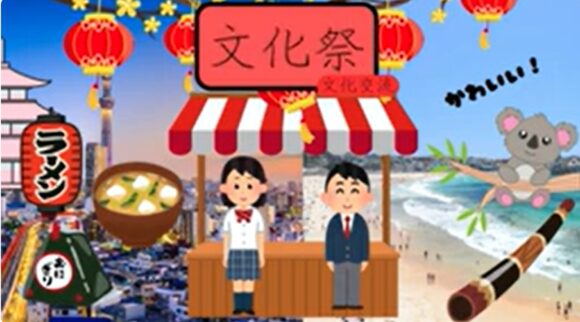
3rd Prize — Bunkasai and Bunkakouryuu: This presentation proposes cultural festivals organised by high school students to further deepen exchange between Australia and Japan. It presents several benefits of holding events to introduce each other’s cultures at both Australian and Japanese high schools. They would provide students with opportunities to use each other’s languages, allow each culture to be introduced more widely to the communities surrounding the schools, generate income through the sale of food and other items, and give students an opportunity to develop a sense of responsibility and co-operation by working together to prepare for and run the events.
2026 Open Division
The 1st Prize Winner
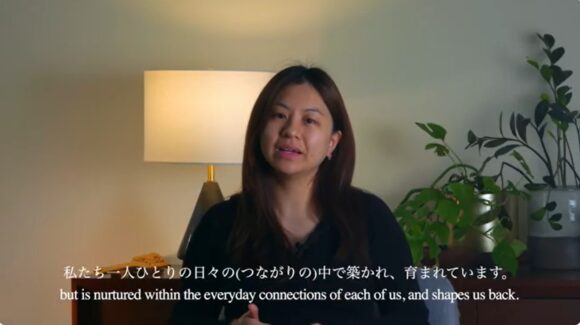
The 2nd Prize Winner
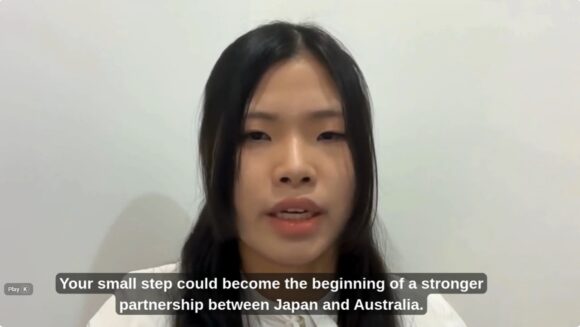
The 3rd Prize Winner
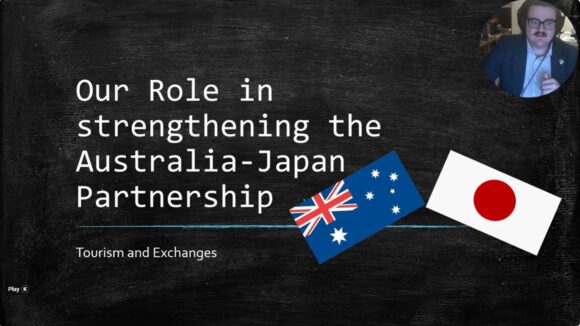
Sponsors:
| Prize | Name | Presentation Title |
| 1st | Joyce Agbuya-Cheok (NSW) | You Would Be Proud |
| 2nd | Eunbi Kang (University of Technology Sydney, NSW) | We Are the Bridge |
| 3rd | Joshua Cowan (QLD) | Tourism and Exchange |
1st Prize — You Would Be Proud: This presentation introduces the speaker’s work organising Japanese-language exchange activities as a place where people can connect with one another. It argues that, rather than building relationships between countries solely through large-scale institutions and systems, it is important to value connections between individuals. Looking back on their time as a high school student, the speaker gives concrete examples, based on their personal experiences, of how they have remained connected with Japan and the Japanese language up to the present day, and what they have gained through Japanese-language exchange.
2nd Prize — We Are the Bridge: The presentation argues that, by people like the speaker who are interested in Japan introducing Japan to those around them, more people will come to understand the country. In other words, the message that the meaning of learning Japanese lies not simply in knowing words, but in understanding the culture and becoming a bridge through which that understanding can be shared with others, was particularly compelling.
3rd Prize — Tourism and Exchange: Focusing on the 50th anniversary of Australia-Japan relations, this presentation argues that the strong bilateral relationship between Japan and Australia is built on connections between their people. As examples of these connections, it introduces the value of experiences such as tourism and exchange programs and argues that the role of citizens is to get to know one another and discuss future mutual co-operation.
2026 Special Prize
Sponsored by TFE Hotels
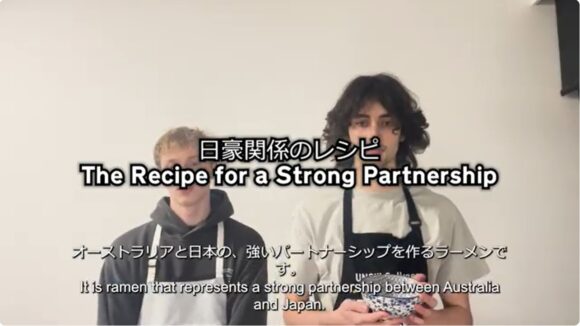
| Name | Presentation Title |
| Barnaby Young & Torran Barton (University of New South Wales, NSW) | The Recipe for a Strong Partnership |
This presentation in Open Division had a unique approach of presenting the ingredients needed to help build a strong Australia-Japan partnership in the form of a ramen recipe. Using several events that take place through interactions between Japanese students studying at an Australian university and Australian students as examples, it assigns each of the things that should be valued in these situations to a different ramen ingredient and introduces them in an engaging way. We hope that this recipe for creating connections between people and maintaining those relationships will become known to many people.
2026 NihonGO! Presentation Fest
1. Aim of Contest and Background
This is a contest for Japanese language users in Australia to present their messages by using Japanese.
Presentation skills are indispensable for people with different ideas to exchange opinions and thoughts to understand each other. Especially in today’s world with advanced technologies, it has become common to use images and videos as well as words to convey messages. By communicating in this way, you can cross language barriers and reach a wider audience for mutual understanding in the world.
2. Contest Format
Entries should be made directly to The Japan Foundation, Sydney. There is no state/territory level contest as the pre-requirement.
The contestant must be able to send a message to not only Japanese language users but also to those who don’t know Japanese, by using methods other than language as well.
The presentation must include a human voice speaking Japanese (artificial human voice is unacceptable), however the supporting contents don’t have to be in Japanese.
Some examples are:
- To add captions in English while speaking Japanese
- To show key words of the presentation in English
- To utilise visual materials, e.g. PowerPoint, photos, videos, sign language…etc.
Divisions:
The Presentation Contest has two categories. These are:
- High School Senior Division (Individual or Group)
- Open Division (Individual or Group)
Topic of Presentation: The topic for the 2026 contest is OUR ROLE IN STRENGTHENING THE AUSTRALIA-JAPAN PARTNERSHIP
Entrants are not allowed to use the same presentation which has been made and entered into any other contests.
Length of Presentation (Time Limit):
High School Senior Division: 5 minutes
Open Division: 5 minutes
3.Conditions of Entry
High School Senior Division
This Division is open to students in Year 11 and 12: (Students who are enrolled in Year 10 or under but taking Year 11 or 12 course are ineligible.)
- Contestants must be studying/have studied Japanese as a foreign language
- Contestants may be studying/have studied Japanese as their heritage language
- Contestants can be at any level of Japanese language proficiency
- Contestants may have visited or lived in Japan for any length of time
- Both individual entries or group entries are allowed. There is no limit to the number of people in one group.
- No contestants may appear in both individual and group entries.
- Identical presentations cannot be made by a different individuals/groups from the same school or institution.
Open Division
This Division is open to anyone aged 17 or above who are no longer high school students:
- Contestants must be studying/have studied Japanese as a foreign language
- Contestants may be studying/have studied Japanese as their heritage language
- Contestants can be at any level of Japanese language proficiency
- Contestants may have visited or lived in Japan for any length of time
- Both individual entries or group entries are allowed. There is no limit to the number of people in one group.
- No contestants may appear in both individual and group entries.
- Identical presentations cannot be made by a different individuals/groups from the same institution or organisation.
4. Judging Criteria & Judges
Message 50% (message/topic/contestant’s views are clear, interesting, attracting and convincing)
Effects 20% (supporting contents are linked well with the message, and are also appealing and effective)
Structure 20% (presentation structure is well balanced and easy to follow)
Language 10% (Audiences should be able to understand the presentation even with possible errors in vocabulary, grammar, or pronunciation)
- The presentation should be recorded clearly in the video.
- Please be mindful of the time limit.
5. Prizes
To be announced on the contest webpage.
6. Date and Venue
The Presentation Contest will be held via video entries directly to The Japan Foundation, Sydney.
Entry will close at 5pm (AEST) on July 20, 2026
The winners will be announced by August 31 2026 on the contest webpage.
Presentation can be done in many different ways – – some focus more on verbal presentation while others use more visual materials.
The most important thing is to convey your idea, opinion, and thoughts to the wider range of audience beyond the language you speak. No matter what your Japanese language level is, you can integrate it into your presentation in your own unique way. There is no definite style or format the contest requires in your presentation. Also, the level of your Japanese language competence is not the main criteria for judgement.
Some of the suggested styles are:
- Presentation in English and subtitle in Japanese
- Presentation in English and visual information in Japanese
- Presentation in Japanese and subtitle in English
- Presentation in Japanese and visual information in English
- Presentation in Japanese and visual information also in Japanese
Here are some examples of excellent presentation to give you some ideas: unique topic, efficient image and props use, effective interaction with audience, enjoyable and easy to understand presentation, well organised group work, entertaining skit….etc.
- 新しいアイデアのつくり方 | 高橋 晋平 | TEDxTokyo – YouTube “How to Create New Ideas”
- プレゼンテーション高校生チーム2019年度日本一!/大阪三国丘高等学校(日本政策金融公庫高校生ビジネスプラン・グランプリ) (youtube.com) Business Plan Presentation by Mikunigaoka High School
- 第8回全国学生英語プレゼンテーションコンテスト【優秀賞/グループ】 (youtube.com) “A Suggestion for Workshop on Gender Issues”
Please just remember that you will not require such high level of language skills which you see in the above videos. Instead, we hope you can get an essence of a great presentation from them.
You will be producing your own video and uploading it as an unlisted video to YouTube. Do not use a video or file sharing site other than YouTube (not Google Drive, not Facebook, etc).
• Video length: 5 minutes maximum.
• Upload your video to your own channel on YouTube.
• In the YouTube video title field, use the following naming format:
NihonGO!26: [Presentation Title] – [Contact Name] – [Division (HS or Open)] – [State/Territory]
Use English characters only. YouTube has a limit of 100 characters. If you cannot fit your video name as above, please include the portion of your [Presentation Title] that fits, omit the rest but include the full length title when you fill out the Entry Form tab.
Example: “NihonGO!26: The Pirate King – Buddy D. Kloun – HS – NSW”.
• Description: The summary of your presentation in English. Word count to be roughly 100 – 150 words.
• Privacy settings: Must be set to “Unlisted” (so that the video does not appear in search and cannot be viewed without the link).
• Tags: not needed
Deadline: 5pm (AEST) on July 20 (Mon) 2026
This form is currently closed for submissions.
<1st Prize>
For High School Senior Division: A package of original goods from Japan Airlines and Central Japan Railway Company. $100 voucher from JTB Australia and $200 voucher from Kinokuniya Bookstore of Australia
For Open Division: Invitation to The Japan Foundation’s Japanese-language program in Japan*
<2nd Prize>
$150 prepaid Gift Card courtesy of Temple University Japan Campus
<3rd Prize>
$50 prepaid Gift Card courtesy of Temple University Japan Campus
<Special Prize>
Overnight accommodation for two in Australia courtesy of TFE Hotels
*This program aims to enhance Japanese language proficiency and provide cultural immersion experiences in Japan, and it is expected to be held for two weeks in 2027. The program content, schedule, duration, and other details will be determined by The Japan Foundation Japanese-Language Institute, Kansai. Detailed information regarding the program will be provided only to the award recipient after the final results have been announced.
Past Contests
ENQUIRIES
Japanese Language Department
(02) 8239 0055
Supported by